National Civil Aviation Work Conference 2026 Held in Beijing09/01/2026
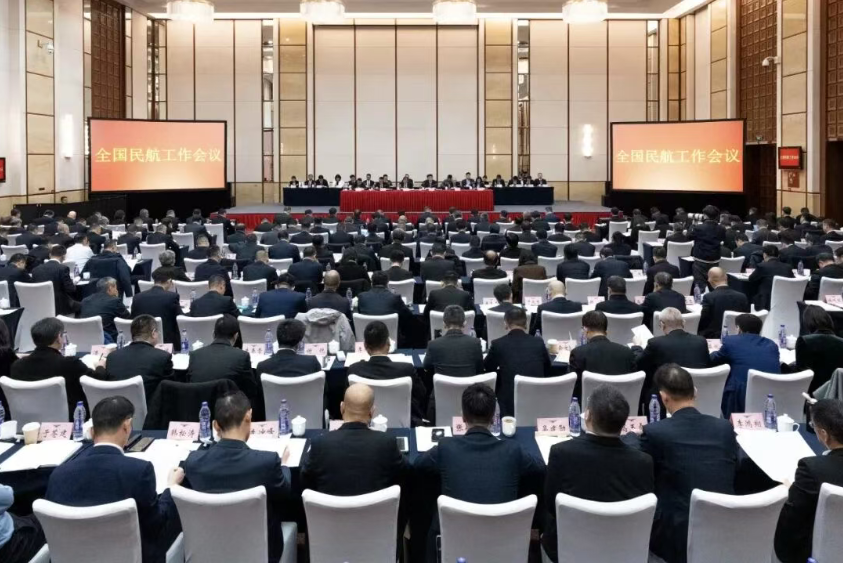
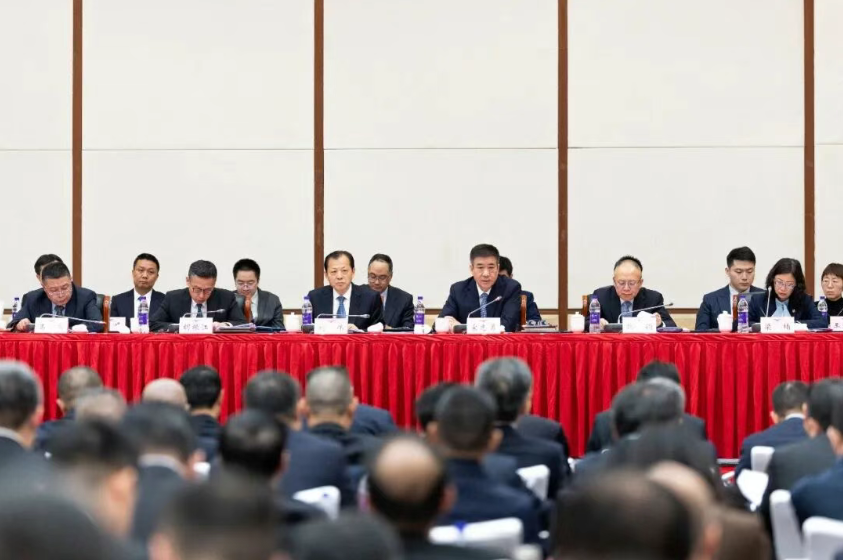
On January 6, the National Civil Aviation Work Conference 2026 was held in Beijing. Liu Wei, Minister of Transport, attended and delivered a speech. Song Zhiyong, Administrator of the Civil Aviation Administration of China (CAAC), presented the work report titled Consolidating the Foundation and Exerting Comprehensive Efforts to Ensure a Strong Start for the 15th Five-Year Plan through Solid and Effective Work. CAAC Deputy Administrators Hu Zhenjiang, Han Jun, Ma Bing, and Liang Nan attended the Conference, with Hu Zhenjiang presiding over the meeting. Representatives from the Discipline Inspection and Supervision Team stationed at the Ministry of Transport by the Central Commission for Discipline Inspection and the National Commission of Supervision, relevant national ministries, as well as various units and departments of the civil aviation sector, participated in the Conference, which lasted for one and a half days.
Liu Wei noted that in 2025, the service and support capabilities of civil aviation continued to strengthen, the quality and efficiency of industry development kept improving, new quality productive forces were accelerated, and the overall safety situation remained stable. During the 14th Five-Year Plan period, civil aviation made solid strides in high-quality development, laying a strong foundation for the transition from "quantity-based" to "quality-focused". Liu Wei emphasized the need to continuously strengthen civil aviation safety management, thoroughly implement the Civil Aviation Law, and focus on preventing and mitigating major safety risks. He called for a policy and institutional system that promotes the high-quality development of civil aviation, the ability to support major national strategies, and new quality productive forces in the civil aviation sector. He emphasized the importance of deepening reforms, expanding openness for accelerating the high-quality development of civil aviation. Liu Wei also outlined requirements for ensuring safe and smooth travel during the Spring Festival season.
In his work report, Song Zhiyong pointed out that in 2025, following the decisions and arrangements of the Party Central Committee and the State Council, the entire industry fully adopted the new development philosophy, adhered to the general principle of seeking progress while maintaining stability, and served the new development pattern. By effectively addressing the external impact and challenges, the sector elevated its high-quality development to a new level, while maintaining a stable and positive trend. The main targets and tasks were well accomplished, marking a successful conclusion of the 14th Five-Year Plan. Throughout the year, the industry completed a total transportation turnover of 164.08 billion ton-kilometers, carried 770 million passengers, and handled 10.172 million tons of cargo and mail, representing a year-on-year increase of 10.5%, 5.5%, and 13.3%, respectively. International flights recovered to over 90% of the 2019 level, with international passenger volume increasing by 21.6% year on year. With over 500 million air travelers, China has become the country with the largest population travelling by air in the world. The industry this year completed 14.551 million flight hours and 5.547 million flight movements. While flight hours up by 5.3% year-on-year, the incident rate per 10,000 flight hours decreased by 5.9%. With a 4.7% year-on-year growth in flights, the flight regularity rate still exceeded 90%, and the boarding bridge usage rate at major airports reached 85.8%. Infrastructure construction was accelerated, driving industry-wide fixed asset investment to 120 billion yuan. The industry achieved a profit of 6.5 billion yuan for the year, indicating further improvement in operational efficiency. The newly revised Civil Aviation Law was promulgated. Traditional general aviation completed 1.218 million flight hours, the total number of registered drones exceeded 3.28 million, and their cumulative flight hours reached 45.3 million, representing a year-on-year increase of nearly 70%.
In the work report, Song Zhiyong reviewed the efforts in civil aviation sector during the 14th Five-Year Plan period. Over the past five years, China's civil aviation has witnessed an extraordinary and remarkable journey. Aviation safety returned to a stable level and continued to improve, transportation and production achieved steady recovery and high-quality growth, and fixed asset investment reached new heights, creating a stronger development foundation. Major breakthroughs were made in domestic equipment, and independent development capabilities saw significant enhancement, which secured a mature modern civil aviation industry system, with its role as a strategic industry becoming increasingly prominent.
The Conference outlined seven key tasks for civil aviation work in 2026, namely safeguarding the bottom line of aviation safety, fully leveraging the guiding role of planning, serving the construction of the new development pattern, enhancing development quality and efficiency, promoting smart, green, and integrated development continuing to advance comprehensive reforms, and deepening the comprehensive and strict governance of the Party.
During the Conference, participants discussed the key tasks and requirements for civil aviation in 2026 and during the 15th Five-Year Plan period, and offered opinions and recommendations.
FILE:
Regulations & Policies
Research